Thursday, December 30, 2004


Wednesday, December 29, 2004
DREAM: Samurai theatre
I dreamed last night that I had agreed to make a theatre piece with the employees of a stationery store near the university. It was my favorite store, I was always hanging out there. The town was some dream-amalgam of Palo Alto and Seattle; the school, Stanford/UW.
I travelled by squatting in a small, 18", round red scooter-dish/hovercraft powered by four D-cell batteries. It only went 25 miles an hour and was hard to control, but I could put it in my backpack when I arrived. I made a note to get an extra set of batteries.
Rehearsal was scheduled for 3:00, but got moved to 8:00. I wanted to make handouts but had no money. I spent the time in fierce mental preparation.
I wanted to convey that I was a physical theatre director, so I brought the videos of WarHorses and my work at the Odin. The Odin snippet was of me doing a handstand on wheelbarrow handles in the corner of the room, from which I dove out the open window and over the roofs, swoop-flying. On the far side of the roofs, a cliff fell 120 feet to the sparkling blue sea. Later, I climbed out on the cliff but was too scared to jump, and froze, clinging to the orange rock -- although the senior Odin people jumped freely. I was heartened to see how strong & disciplined I looked in the video, even at my current weight, wearing black leotard and tights.
Time for rehearsal.
Seven people show up: five women, two men. One guy is a musician, has many ethnic drums & instruments. We go out back to rehearse. It is an outside basketball court, in the hot sun on an asphalt roof, like our game developers in Chicago had. But it's free, so this is our space. We begin. Turns out they have all had Suzuki training; when I start O Splendor, they join in. I get a little spurt of happiness.
Then one woman says, "Well, actually, there is a space behind our store we can use." Their back door opens into an underground labyrinth of old cement, brick, and corridors, behind all the stores on that block. We go in. This room is much nicer --long, with black and white linoleum, cool, quiet. As we're talking, another woman says, "Well, there is that other space behind this one. Leezie lets us use it for free, if no one has it booked."
We go in.
It is a samurai temple -- hardwood floors, tatami mats, dark brown pillars, twelve dark-brown tibetan singing bowls placed as if waiting for a company to sit. The space with the 12 bowls is the innermost space. Absolutely sacred and clean. I was blown away. "How much if we want to book it?" I asked. "$500 a month," they said. "We'll pay," I said, so shocked at its beauty that I could no longer hold onto the dream.
Reeling, I fell skyward, waking up.
================================
INTERPRETATION
My next step will grow out of my current state, which is, literally, stationary. In real life, after Dance Company I moved to Palo Alto, where I played piano for two ballet studios in the evenings (in return for classes), plus worked in a stationery store. So I associate stationery with love and rigorous physical work -- and with moving across the country, beginning anew.
When I follow theatre, the way keeps appearing. The better space always lies more inwardly, toward the heart.
I get body hits all over this dream. Plus I worked out hard yesterday, doing both Suzuki training & a ballet barre, and I have declared 2005 "The Year of the Body." It looks like my unconscious is getting the message.
Even asleep, I am sharply occupied with the perennial search for rehearsal space. Or maybe it is also the search for my space in life, the new space I must carve. The spaces in this dream progress from one like the videogame company (Microsoft)... to one like BCC... to one like the Odin, mirroring my life's path.
That little red scooter-dish means I'm currently going way slower than other people. On the other hand, although slow, the scooter dish WAS something new -- it was actually a hovercraft, not a wheeled vehicle. It was a student conveyance, like a bike. So, maybe I'm just new at this unfolding life of mine.
In real life, I saw The Last Samurai over and over while I lived at the Odin. I, too, was living with samurai -- with practitioners of a life of greater purity, ethics, and discipline than I had known. And living there was remaking me. The samurai temple felt to me like the heart of the samurai village, just as the Odin studios felt like the heart of the theatre.

The samurai temple in The Last Samurai
And, while I'm at it -- this is another space that has been resonating with me. In the Nureyev video, they were talking about how he began with folk-dance training. They showed the kind of folkdancing he had done -- but what blew me away was the SPACE in which they were dancing. I could feel, like a physical jolt, my hunger for that space. The same feeling I had in the dream for the samurai temple.
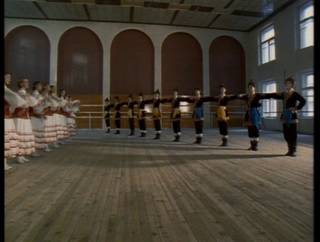
An incredible Russian space, from the Nureyev video
When I first visited Moscow, I was being driven to a play with a Russian theatre director, his actress wife, and translator daughter. "That theatre is now empty," translated his daughter, pointing to a large building. He spoke again in Russian. Before she could translate, I guessed -- "And I would like that space?" I asked. They laughed; it had been, to the word, what he had said.
I travelled by squatting in a small, 18", round red scooter-dish/hovercraft powered by four D-cell batteries. It only went 25 miles an hour and was hard to control, but I could put it in my backpack when I arrived. I made a note to get an extra set of batteries.
Rehearsal was scheduled for 3:00, but got moved to 8:00. I wanted to make handouts but had no money. I spent the time in fierce mental preparation.
I wanted to convey that I was a physical theatre director, so I brought the videos of WarHorses and my work at the Odin. The Odin snippet was of me doing a handstand on wheelbarrow handles in the corner of the room, from which I dove out the open window and over the roofs, swoop-flying. On the far side of the roofs, a cliff fell 120 feet to the sparkling blue sea. Later, I climbed out on the cliff but was too scared to jump, and froze, clinging to the orange rock -- although the senior Odin people jumped freely. I was heartened to see how strong & disciplined I looked in the video, even at my current weight, wearing black leotard and tights.
Time for rehearsal.
Seven people show up: five women, two men. One guy is a musician, has many ethnic drums & instruments. We go out back to rehearse. It is an outside basketball court, in the hot sun on an asphalt roof, like our game developers in Chicago had. But it's free, so this is our space. We begin. Turns out they have all had Suzuki training; when I start O Splendor, they join in. I get a little spurt of happiness.
Then one woman says, "Well, actually, there is a space behind our store we can use." Their back door opens into an underground labyrinth of old cement, brick, and corridors, behind all the stores on that block. We go in. This room is much nicer --long, with black and white linoleum, cool, quiet. As we're talking, another woman says, "Well, there is that other space behind this one. Leezie lets us use it for free, if no one has it booked."
We go in.
It is a samurai temple -- hardwood floors, tatami mats, dark brown pillars, twelve dark-brown tibetan singing bowls placed as if waiting for a company to sit. The space with the 12 bowls is the innermost space. Absolutely sacred and clean. I was blown away. "How much if we want to book it?" I asked. "$500 a month," they said. "We'll pay," I said, so shocked at its beauty that I could no longer hold onto the dream.
Reeling, I fell skyward, waking up.
================================
INTERPRETATION
My next step will grow out of my current state, which is, literally, stationary. In real life, after Dance Company I moved to Palo Alto, where I played piano for two ballet studios in the evenings (in return for classes), plus worked in a stationery store. So I associate stationery with love and rigorous physical work -- and with moving across the country, beginning anew.
When I follow theatre, the way keeps appearing. The better space always lies more inwardly, toward the heart.
I get body hits all over this dream. Plus I worked out hard yesterday, doing both Suzuki training & a ballet barre, and I have declared 2005 "The Year of the Body." It looks like my unconscious is getting the message.
Even asleep, I am sharply occupied with the perennial search for rehearsal space. Or maybe it is also the search for my space in life, the new space I must carve. The spaces in this dream progress from one like the videogame company (Microsoft)... to one like BCC... to one like the Odin, mirroring my life's path.
That little red scooter-dish means I'm currently going way slower than other people. On the other hand, although slow, the scooter dish WAS something new -- it was actually a hovercraft, not a wheeled vehicle. It was a student conveyance, like a bike. So, maybe I'm just new at this unfolding life of mine.
In real life, I saw The Last Samurai over and over while I lived at the Odin. I, too, was living with samurai -- with practitioners of a life of greater purity, ethics, and discipline than I had known. And living there was remaking me. The samurai temple felt to me like the heart of the samurai village, just as the Odin studios felt like the heart of the theatre.

The samurai temple in The Last Samurai
And, while I'm at it -- this is another space that has been resonating with me. In the Nureyev video, they were talking about how he began with folk-dance training. They showed the kind of folkdancing he had done -- but what blew me away was the SPACE in which they were dancing. I could feel, like a physical jolt, my hunger for that space. The same feeling I had in the dream for the samurai temple.

An incredible Russian space, from the Nureyev video
When I first visited Moscow, I was being driven to a play with a Russian theatre director, his actress wife, and translator daughter. "That theatre is now empty," translated his daughter, pointing to a large building. He spoke again in Russian. Before she could translate, I guessed -- "And I would like that space?" I asked. They laughed; it had been, to the word, what he had said.
Tuesday, December 28, 2004
Ballanchine, Nureyev, Baryshnikov
The fairy stories say that on New Year's Eve, between the first and twelfth strokes of midnight, all rules are suspended. A child can dance with Orion. A girl walks into the cuckoo clock and steps out in Russia.
I feel that way about the last week of the year: Anything can happen.
I watched specials on Nureyev, Baryshnikov, Balanchine. I can't get them out of my head. They shimmer like a chord made of snow.
If we dip our finger in water and write, our feelings while we write change the crystalline structure of the water.
Nureyev, sick with Aids but still strong, sat naked on a rock at the end of his video, looking at the sea from his island. Then he stood and dived in. The camera followed him as he swam, until a rock intervened and he vanished. As uneventfully as he had arrived -- he was gone.
(Here, Akropolis's three voices begin to sing that soft dark Russian folksong -- "Bayuuuushk...". Over it, we see the dancers' images appear...)

Ballanchine (Balanchivadze)

Nureyev and Ballanchine

Nureyev and Baryshnikov

Nureyev

Nureyev, just before disappearing

Ballanchine teaching Baryshnikov "Prodigal Son"

Ballanchine and Baryshnikov

Baryshnikov as Prodigal Son, pulling himself up his father's body with only arms and abs, in ultra-slow-motion the whole way...


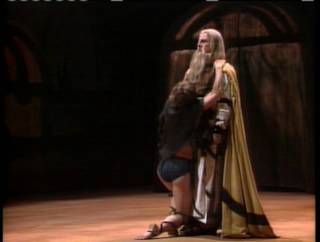


...until he ends curled into his father's neck
I feel that way about the last week of the year: Anything can happen.
I watched specials on Nureyev, Baryshnikov, Balanchine. I can't get them out of my head. They shimmer like a chord made of snow.
If we dip our finger in water and write, our feelings while we write change the crystalline structure of the water.
Nureyev, sick with Aids but still strong, sat naked on a rock at the end of his video, looking at the sea from his island. Then he stood and dived in. The camera followed him as he swam, until a rock intervened and he vanished. As uneventfully as he had arrived -- he was gone.
(Here, Akropolis's three voices begin to sing that soft dark Russian folksong -- "Bayuuuushk...". Over it, we see the dancers' images appear...)

Ballanchine (Balanchivadze)

Nureyev and Ballanchine

Nureyev and Baryshnikov

Nureyev

Nureyev, just before disappearing

Ballanchine teaching Baryshnikov "Prodigal Son"

Ballanchine and Baryshnikov

Baryshnikov as Prodigal Son, pulling himself up his father's body with only arms and abs, in ultra-slow-motion the whole way...


...until he ends curled into his father's neck
Thursday, December 23, 2004

Wednesday, December 22, 2004
5000th visit & stats
Today marks the 5000th visitor to this site.
I was trying one of Google's new search thingies, Google Suggest, where they try to complete the word as you type. It gives a "Results" counter for each site. I don't know if it's counting crawls, hits, or searches -- but "Rachel Rutherford" comes up with 78,800. That includes me and a fairly popular dancer with the New York City Ballet of the same name. But still.
In honor of the occasion, I thought I'd share the latest stats.

Where my last 1000 visitors were from
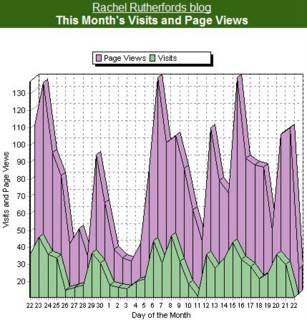
Green = looked at the page
Purple = looked at additional pages/links

Totals since this blog began

Visitors to my Guestmap; click to enlarge/focus
I was trying one of Google's new search thingies, Google Suggest, where they try to complete the word as you type. It gives a "Results" counter for each site. I don't know if it's counting crawls, hits, or searches -- but "Rachel Rutherford" comes up with 78,800. That includes me and a fairly popular dancer with the New York City Ballet of the same name. But still.
In honor of the occasion, I thought I'd share the latest stats.

Where my last 1000 visitors were from

Green = looked at the page
Purple = looked at additional pages/links

Totals since this blog began

Visitors to my Guestmap; click to enlarge/focus
Tuesday, December 21, 2004
Fractal Greatness Lab: your own horse face
I just sent my ideal job to Google and am having that "Ahhh" feeling.
Running an ensemble-theatre, working for Google, being a life coach -- it's all the same thing: catalyzing people and teams toward Greatness. The instrument I like to play, and play with, is a sentient being consisting of a wide-open, hot-linked, world-class creative team. It took me 47 years to learn how to create and play with such a creature.
Wild courageous humans, my instrument of choice.
Yesterday I did an all-day personal retreat on "What do I want?" It was free-form, wide-ranging, looking at the far future as well as now. When I sat down today to finish my Ideal Google Job, I took my "What do I want?" results, marinated in the Google website for a couple hours, and then figured out where the two mesh.
My ideal job at Google is creating and running a Fractal Greatness Lab -- seeding Greatness at every fractal level: personal, team, product, vision.
The hardest part was getting the name right.
I can't believe I thought up such a fun job. That I already know how to do. That moves forward on all my paths at once. The goal I had set for myself was, "A fun, lucrative, formidable, surprising job."
It's not the Google job that makes me feel this way. It's acting in integrity with my Gift.
Let's see if I can say this deeper.
when it is your time
to bloom, let every fat lush
petal open YES
laughing as you break
the surface, water streaming
down -- benediction
when you find the pair
of shoes that's yours, put them on --
brown leather, worn gold
the dalai lama
says a vow is an intention,
asymptotic
god knows your secret
name and one day so do you --
it's your own horse face
Google nibbles
I'm finishing up my Ideal Google Job description. What is cool is, it's pretty similar to the VP of Strategy job I proposed for the startup game company. Turns out, I basically want to do what I'm good at, wherever I go.
In a cool synchronicity, one of the Google recruiters also contacted me about a Business Product Manager position. Since I am open to the possibility that god may have a better idea of where I fit than I do, I'm following up with that one as well.
More news with there is news. Thanks, Rob. And Radmila.
Monday, December 20, 2004
One God Clapping: The spiritual path of a zen rabbi

Great book. Alan Lew ("Lev") was born Jewish, became a devout practitioner of zen buddhism, and studied it for ten years. Then, as his own nature became revealed to him, he turned again to Judaism, went to rabbinical school, became a rabbi, and eventually began introducing buddhist meditation techniques to his congregation.
That's what it looks like from the outside. From the inside, it's one seamless whole. A spiritual journey that seeks, and keeps seeking. His brush with the Kabbalah is an irradiance beyond light.
There is a good plainness to this text. Some chapters, to give you a taste:
Jewish karmaWhen I write my theatre book, I want it to be this plain. Like the forgotten voice is talking.
Lech lecha
Dokusan
Form is emptiness
God was in this place and I didn't know it
When the Messiah doesn't come
Teshuvah
Prayer
The lineaments of the divine encounter
To struggle with god until your name changes
Saturday, December 18, 2004
Andersen's Dream

Hans and Sheherezade (click to enlarge & focus)
This just in... this is a scene from Andersen's Dream, the play whose rehearsals I observed, when living at the Odin Teatret in Denmark this year. This is Kai Bredholdt and Julia Varley with the Hans Christian Andersen and Sheherezade puppets.
From my journal at the time:
"Master actors play with puppets who play with fire."
What I cooked yesterday

I made:
black beans sauteed with mushrooms and green onionsI was a cooking fool.
steamed golden potatoes with butter
salad, with purple cabbage, carrots, cucumbers, tomatoes, avocadoes, and tangerine slices
fruit salad, with apples, pears, and mandarins
devilled eggs
a dozen hard-boiled eggs
a double-batch of chocolate-chip cookies with pecans
Friday, December 17, 2004
Maturation of an artist -- Mikhail, Twyla, & Andre

Baryshnikov

Baryshnikov & Tharp in "Once More, Frank"
Twyla Tharp is the choreographer who put dancers in sneakers and jeans, mixing classical and ragged everyday moves. It looked casual and precise, all at once.
I studied with one of Twyla's dancers, Sara Rudner, while I was in the Oberlin Dance Company.
Twyla and Baryshnikov were great collaborators. Twyla could think up stuff only Mikhail could dance -- and he, in turn, pushed her past anything she had invented before. Their most famous was Push Comes To Shove. They also did a piece about a hanged man. It began with him stepping off a table onto the top edge of a chair's back, then stepping down onto the seat of the chair -- which, by the way, had begun tipping over the moment he stepped onto it -- and then, controlling the chair's fall, he stepped onto the ground. It looked impossible.
Anyway. So here's Andre.
A few weeks ago I had dinner with Twyla Tharp in her kitchen, and we were talking about the problems of the artist, or for that matter the individual, maturing in our society.
Why do we have so few mature artists?
Tyring to answer this question, we began to speculate that your early years, say your twenties, should be all about learning -- learning how to do it, how to say it, learning to master the tools of your craft; having learned the techniques, then your next several years, say your thirties, should be all about telling the world with passion and conviction eveyrthing that you think you know about your life and your art.
Meanwhile, though, if you have any sense, you'll begin to realize that you just don't know very much -- you don't know enough. And so the next many, many years, we agreed, should be all about questions, only questions, and that if you can totally give up your life and your work to questioning, then perhaps somewhere in your mid-fifties you may find some very small answers to share with others in your work.
The problem is that our society (including the community of artists) doesn't have much patience with questions and questioning. We want answers and we want them fast.
-- Andre Gregory, "My Dinner With Andre"
Twyla's piece for actors, mine for 12 pianists

Andre Gregory

Twyla Tharp
Andre Gregory begins the preface to Wallace Shawn's My Dinner With Andre with a story about working with Twyla Tharp.
Six years ago, when I was still running my theatre group, The Manhattan Project, Twyla Tharp choreographed the group and me in a four-and-a-half-minute piece which we performed in concert at Town Hall.I LOVE that story. I love Twyla's vision, her route, her insistence, and the actors' transcendence.
The piece was absolutely impossible to do. There was no way that a group of non-dancers could do it. It was incredibly fast, and there must have been hundreds of steps in it. In order to get through it at all, you had to forget yourself, abandon yourself, completely.
In rehearsal, Twyla treated us as if we had all trained for years with the American Ballet Theater. "Do this," she'd say, and we would, and she'd laugh, and then, "Do this," and we would, and she'd laugh, and when we reached performance, twelve hundred people leapt to their feet and gave us a dozen curtain calls. There were tears of laughter on people's faces. We had danced one of Twyla's most complex creations with absolute precision, very, very badly.
-- Andre Gregory, Preface, "My Dinner With Andre," June, 1981

When I was a senior in high-school, I was the pianist for everything, including our 11-person girl-group called The Good Day Singers. The Good Days performed two to three times a week my senior year, making us basically professionals. For our final concert, I said I would compose an original piece for us.
I asked each girl how well she could play the piano. Then I wrote a piece for twelve pianists on four pianos -- three girls per instrument. I was meticulous. The girls who could really play, got written music. The ones who could barely play, got simple patterns they could learn by rote. The ones who didn't play at all got one note -- "Look for any white key just before two blacks. Listen, then hit your key on the beat, until Susan does that big thumpy part."
When it came time for the piano piece -- halfway through our show, to break up the singing -- we rolled every piano the high-school had, out onto the stage. Two uprights, one spinet, and the grand. The audience started laughing. We stepped up imperiously, in our sleeveless slim-line dark-pink-with-white-stars full-length silk dresses, and gravely began. They roared. They didn't stop laughing the whole piece. It just came in bigger and bigger waves. At the end, we bowed, to an ovation.
I was offended they hadn't taken it seriously. But with perspective, I realized why they laughed -- it's the same reason they laughed at Twyla's.
Andre continues:
For some reason, the experience with Twyla brought to life the White Rabbit in me, and without thinking, in the heat of the moment, like Alice, I followed it down a rabbit hole and gave up my career as a theatre director.Since I too quit work at 40 and followed the wind for four years, I understand.
I embarked on a series of adventures. I went to Asia. I went to North Africa. I stayed up till odd hours of the morning talking to Buddhists and physicists about ancient mysteries. Many of my friends and most of my colleagues thought I was at best ill-advised, and at worst mad. This went on for about three years, until I reached a moment when for some reason my adventures began to seem to me somehow less frightening, less adventurous.
-- Andre Gregory, Preface, "My Dinner With Andre"

Eugenio Barba
In three years a man can be born, die, and be born again. Sometimes three years is enough.
-- Eugenio Barba
Push comes to shove

Twyla's book
Every morning at 5:00am, a car appears at Twyla's building. Same driver every day. She stumbles down, gets in, and he takes her to the gym where, at 5:30 every morning, her trainer waits. She does her workout, and is driven home.
This is how a pro does it -- with professional-level support. Twyla is one of the best choreographer/dancers in the world. If she needs this to get herself moving, I have to believe it would work for me too.
In her book, she comments on the phenomenon where, when we have to write a paper, we suddenly have an overwhelming urge to clean the kitchen. Her theory is that movement STARTS the brain working, not vice-versa; that it is an innate wisdom of our organism that gets us on our feet, to prepare for the task at hand.
Well, I've been having all these artistic insights and breakthroughs the last two days. It occurs to me, I've also been dancing and doing Suzuki slowtens & shakuhachis for two hours each of those days.
Coincidence? I think not...
Gael, Diego, Tage -- world actors

Diego Luna & Gael Garcia Bernal
I got this idea to write a screenplay for Gael and Diego, the two guys from Y Tu Mama Tambien. It sprang into my head from nowhere.
Two nights ago, as I went to sleep I asked myself, "What's the screenplay about?" All night I wrestled with that. Near morning I began to dream I was watching scenes from the movie. I was busy reshaping them when I had to wake up.
Last night I watched Y Tu Mama Tambien again, but this time as a director. I studied the two actors with empty all-seeing eyes. What I found was, because I was watching the actors as a director, I started seeing the movie as a director, too. This has always happened to me with plays, but never with movies.
Anyway, it had a huge impact. These actors can do anything. There are almost no moments when I don't believe them. And, they're my type of actors -- smart, physical, spontaneous, intuitive, generous.
So the apparent problem is how to write a story worthy of them.
Underneath that, I feel joy -- that during these long fallow months, something in me has been preparing to work with the best actors in the world. Suddenly it seems completely normal. Diego and Gael are just people I haven't met yet. This is another gift of the Odin -- whose actors truly are some of the best in the world.

Tage Larsen
I was teaching the Odin apprentice actors Chekhov when Tage, one of the company actors, said, "I'd love to do Chekhov." "When can you rehearse?" I asked. Well, "Never," was the answer, since he was already in fulltime rehearsal for Andersen's Dream. But in that moment while I was studying him, figuring how to cast him, I realized what a formidable full-grown Chekhov actor he is. That was my first taste of meeting a world-class actor as an equal.
Jim Rapson, the therapist, says, "A hallmark of true organic growth is that we never see it coming. One day, something itches and you reach back to scratch it, and then suddenly wonder -- "Hey, where did that hindfoot come from?" When something has grown organically, when it appears, it seems like it has always been there."
Whispers
The most disconcerting thing that happened to me in my months at the Odin Teatret, was that the gods, who had whispered ceaselessly in my ear for six years, fell silent.
"Maybe what I thought were the gods was really just my internal sense of ethics," I told myself. "And now that I'm in a theatre where all those ethics are being followed, there's nothing to say."
But, like John Nash's invisible companions in A Beautiful Mind, I missed them nonetheless.
It has been a grey year without the gods. But somehow, this last week or two, they have begun to whisper again. Not in the clear intimate way they used to. But in nudges, in softenings of the metal membrane between worlds; in impulses toward art.
There is hope.
Andrew McMasters, artistic director of Jet City Improv, was talking about the research they'd done on Shakespeare's forms, to put together their "Lost Folio" improvised Shakespeare show.
"There are actually four forms," he said. "Tragedy, Comedy, History, and Romance." He went on to discuss the differences between Comedy and Romance, then said:
Again -- hope!
"Maybe what I thought were the gods was really just my internal sense of ethics," I told myself. "And now that I'm in a theatre where all those ethics are being followed, there's nothing to say."
But, like John Nash's invisible companions in A Beautiful Mind, I missed them nonetheless.
It has been a grey year without the gods. But somehow, this last week or two, they have begun to whisper again. Not in the clear intimate way they used to. But in nudges, in softenings of the metal membrane between worlds; in impulses toward art.
There is hope.
Andrew McMasters, artistic director of Jet City Improv, was talking about the research they'd done on Shakespeare's forms, to put together their "Lost Folio" improvised Shakespeare show.
"There are actually four forms," he said. "Tragedy, Comedy, History, and Romance." He went on to discuss the differences between Comedy and Romance, then said:
"People in a Romance always think they are in a Tragedy. People in a Tragedy think everything's normal. They don't know they are in a Tragedy."That sentence exploded inside me. I ALWAYS think I'm in a Tragedy. Therefore -- I must be in a Romance!
Again -- hope!
Wednesday, December 15, 2004
Diva

"Diva" by Radmila Sarac (click to enlarge & focus)
I'd like you to meet my friend, Radmila. She took up painting less than a year ago. In her living room, using only her own wild sense of color, surety, and form, she began covering canvases. Chris, her fiance, showered each with praise. The paintings gradually grew larger -- this one is almost 4 feet tall -- and more confident. Paintings hang on all their walls, with more waiting to be hung. She sold several to raise money for charity, and the bidding was fierce. When she has her own website, I'll let you know.
If you are a painter, you know before you know. The paint calls to you -- the color, the mess, the nakedness, the lushness, the savagery. If you are a painter, surrender. The canvas will teach you everything you need to know.
Surely all art is the result of one's having been in danger, of having gone through an experience all the way to the end, where no one can go any further. The further one goes, the more private, the more personal, the more singular an experience becomes, and the thing one is making is, finally, the necessary, irrepressible, and, as nearly as possible, definitive utterance of this singularity.
--Rainier Maria Rilke, "Letters on Cezanne"
Tuesday, December 14, 2004
The soul of genius
Neither a lofty degree of intelligence
nor imagination
nor both together
go to the making of genius.
Love, love, love,
that is the soul of genius.
-- Wolfgang Amadeus Mozart
Saturday, December 11, 2004
Brahms' Variations on a Theme by Handel

That's the theme.

That's the theme and first variation.
This is a monster of a piece, thirty minutes of brilliance and smash. I played it in high school. I had heard it on a record by Anievas, and was blown away. I told my teacher I wanted to play it. "When you're ready," she said. Three years later I was.

That's the final variation, number 25.
It flies. The treble clef sounds like trumpets when you're up to speed. Your hands are grabbing notes by the fistfuls and tossing them away in glittery chunks. You're slightly lifting off the piano seat to hammer these, and you're hot. Physically hot -- otherwise you can't handle this much force, at speed.
This piece is like a Percheron stallion. It grabs the bit and takes off -- until finally, all you can do is hang on as it thunders down the keyboard.

That's the Fugue, starting halfway down.
Today this was playing on the radio, as I drove to Improv. I tuned in at the imperious opening of the Fugue. Buh-DAH buh-DAHHHHH. Buh-DAH buh-DAHHHHH.
I parked and sat in the car, looking at green salal bushes, till it ended.
Art saves lives. This piece, like any art of such complexity and maturity, teaches us to walk forward, eyes open, into difficulty. Into greater and greater difficulty. The only way out is through.
Subscribe to:
Posts (Atom)